Showing posts with label cognitive bias. Show all posts

Monday, April 30, 2012

experimenter effect

The experimenter effect is a bias in a scientific study of human or animal subjects due to the experimenter giving cues or signals to subjects in the experiment that affects their performance or response. The cues may be subtle, unconscious, nonverbal cues, such as muscular tension or gestures. They may be vocal cues, such as tone of voice or a slight difference in oral instructions given to control and experimental groups. They may be suggestions provided by informing the subjects of what to expect during the study. Research has demonstrated that the expectations and biases of an experimenter can be communicated to experimental subjects in subtle, unintentional ways, and that these cues can significantly affect the outcome of the experiment (Rosenthal 1998). Something similar happens in non-experimental settings. For example, when questioning witnesses or victims of crimes, investigators must be careful not to unwittingly suggest answers by nodding approvingly or praising some answers but not others. The interviewer shouldn't praise or show disapproval of any answer in a fair, unbiased interrogation.

In an earlier post on the priming effect, I mentioned a study by Doyen et al. that attempted to replicate earlier work by Bargh et al. that had found "participants for whom an elderly stereotype was primed walked more slowly down the hallway when leaving the experiment than did control participants, consistent with the content of that stereotype." In their study, Doyen et al. led half the experimenters "to think that participants would walk slower when primed congruently and the other half was led to expect the opposite." Only the subjects given instructions by the experimenters who understood that the test was to see if words associated with aging would prime subjects to mimic a stereotypical behavior of the aged showed the "walking speed effect."

Since most of us don't do experiments, my concern in this blog entry isn't to help experimenters design less biased experiments, but to help those of us who read accounts of those experiments either in scientific journals or in media accounts. What should we look for to determine whether experimenter bias has significantly affected the outcome of a study? And, when evaluating a journalist's account of a scientific study, are any hints of experimenter bias given?

Recently, I attended a conference sponsored by two skeptics' groups. The first speaker at the conference talked about the neurology of religious experiences. She brought up the work of Michael Persinger, a cognitive neuroscience researcher at Laurentian University in Sudbury, Ontario, Canada. She claimed (and so have many others) that Persinger has induced strange feelings--such as the "feeling of a presence" and other feelings sometimes described as "mystical" or "spiritual"--by sending low level magnetic pulses to the temporal lobes. He has his subjects put on a device that has been dubbed "the god helmet" while they sit alone in a darkened, silent room for 30-60 minutes. Persinger has been conducting these experiments over a period of at least fifteen years. He has tons of data and many published papers in peer-reviewed journals. However, I knew that Richard Dawkins had put on the god helmet and sat in the makeshift sensory deprivation chamber without feeling the presence of anything unusual except for the helmet on his head. Dawkins and others have speculated that Persinger's subjects are having experiences that are induced not by magnetic pulses to the temporal lobes but by the power of suggestion and expectation, and a desire for a weird experience. They know what the experiment is about; they long to experience something "spiritual," or Persinger suggests what they will experience and then they do, thanks to his suggestion.

When I suggested that we should be skeptical of Persinger's work because it may be suggestion not magnetic pulses to the temporal lobes that was inducing strange feelings, Dr. Sarah Strand proceeded to lay out the evidence in support of Persinger and against the alternative explanation. Unfortunately, the only evidence she supplied came from Persinger himself and his own analysis of his data. Persinger would not be the most disinterested, unbiased party in such an evaluation. Rather than describe experiments where subjects had no idea what to expect, where some were clearly expecting to experience something weird but Persinger gave them no magnetic pulses at all, or a host of other kinds of experiments that would have ruled out experimenter bias and clearly shown that it was the magnetic pulses that were causing the weird feelings, we were told that Persinger had done some sort of reanalysis of the data he's collected over the years.

Furthermore, what would have clearly ruled out experimenter bias would have been reference to other studies done in other labs by other researchers who had done double-blind, randomized controlled studies that clearly ruled out suggestion or some aspect of the quasi-sensory deprivation chamber experience as a cause and isolated the magnetic pulses as the most significant factor in the inducement of such things as the "feeling of a presence." Unfortunately, Dr. Strand didn't cite any other studies. Why? Because they don't exist.

The only other scientist who has tried to replicate Persinger's work was Pehr Granqvist of Uppsala University and his research team. In a double-blind, controlled study with 90 participants, they found that magnetic pulses had no discernible effect. They did find, however, many subjects from both groups claimed to have had strong religious experiences during the sessions. "Two out of the three participants in the Swedish study that reported strong spiritual experiences during the study belonged to the control group, as did 11 out of the 22 who reported subtle experiences." Persinger argued that the replication failed because the magnetic pulses had not been strong enough or given over a long enough period, which seems absurd given that so many subjects in both the control and experimental groups reported strong or subtle effects.

If it turns out that Granqvist's study is what other labs with no special interest in the outcome continue to find, then Michael Persinger has been deluding himself and others for fifteen years. He would not be the first Ph.D. to have done so. Nor would he be the first to have tainted his experiments with unintentional bias. (If the reader is wondering why Persinger would think stimulating the temporal lobes would induce a "spiritual" experience, it is probably because there have been many reports of those with temporal lobe epilepsy experiencing such things as "oneness with everything."* For more on "spiritual" experiences associated with temporal lobe epilepsy, see V.S. Ramachandran, Phantoms in the Brain, 1998.)

We should also note that it is common for some scientists and journalists to falsely and unjustly accuse other scientists of experimenter bias when the scientists' experiments contradict the accuser's beliefs. It does seem to be a fact that parapsychologists who are skeptical usually get negative results in their psi studies, while believers in psi often get positive results. One important exception is Susan Blackmore, who, while a true believer, continually got negative results and left parapsychology because of it. She's turned her attention to other matters, including trying to figure out why people believe in psi when the evidence for it is so flimsy. In any case, a skeptic (Richard Wiseman) and a true believer (Marilyn Schlitz) explored the experimenter effect while doing a joint study on the staring effect.  In "Experimenter effects and the remote detection of staring" the authors describe their attempt to do a joint study on the staring effect:
Both authors of the present paper previously attempted to replicate this staring effect. The first author (R. W.) is a skeptic regarding the claims of parapsychology who wished to discover whether he could replicate the effect in his own laboratory. The second author (M. S.) is a psi proponent who has previously carried out many parapsychological studies, frequently obtaining positive findings. The staring experiments carried out by R. W. showed no evidence of psychic functioning (Wiseman & Smith, 1994; Wiseman, Smith, Freedman, Wasserman, & Hurst, 1995). M. S.'s study, on the other hand, yielded significant results (Schlitz & LaBerge, 1997).
Even though the authors designed the experiments together, the skeptic got negative results and the psi proponent got positive results. They offer several possible explanations for the difference in their results. I encourage the reader to review their alternative explanations. One explanation they don't seem to consider is that the difference in results could have just been a fluke. More joint experiments by skeptics and psi proponents might resolve this issue, but there is so much hostility between parapsychologists and skeptics that cooperation like that of Schlitz and Wiseman is rare. In any case, the charge of experimenter bias should be ignored, whether made by a skeptic or a psi proponent, unless it is backed up by specific evidence that bias has likely occurred. Claims that the beliefs of skeptics and psi proponents affect the telepathic or precognitive abilities of subjects are pure speculation and beg the question.

Monday, April 23, 2012

halo effect

The halo effect refers to a bias whereby the perception of a positive trait in a person or product positively influences further judgments about traits of that person or products by the same manufacturer. One of the more common halo effects is the judgment that a good looking person is intelligent and amiable.

There is also a reverse halo effect whereby perception of a negative or undesirable trait in individuals, brands, or other things influences further negative judgments about the traits of that individual, brand, etc. If a person "looks evil" or "looks guilty" you may judge anything he says or does with suspicion; eventually you may feel confident that you have confirmed your first impression with solid evidence when, in fact, your evidence is completely tainted and conditioned by your first impression. The hope that the halo effect will influence a judge or jury is one reason some criminal lawyers might like their clients to be clean-shaven and dressed neatly when they appear at trial.

The phrase was coined by psychologist Edward Thorndike in 1920 to describe the way commanding officers rated their soldiers. He found that officers usually judged their men as being either good or bad "right across the board. There was little mixing of traits; few people were said to be good in one respect but bad in another."* The old saying that first impressions make lasting impressions is at the heart of the halo effect. If a soldier made a good (or bad) first impression on his commanding officer, that impression would influence the officer's judgment of future behavior. It is  very unlikely that given a group of soldiers every one of them would be totally good or totally bad at everything, but the evaluations seemed to indicate that this was the case. More likely, however, the earlier perceptions either positively or negatively affected those later perceptions and judgments.

The halo effect seems to ride on the coattails of confirmation bias: once we've made a judgment about positive or negative traits, that judgment influences future perceptions so that they confirm our initial judgment.

Some researchers have found evidence that student evaluations of their college instructors are formed and remain stable after only a few minutes or hours in class.  If a student evaluated a teacher highly early on in the course, he or she was likely to rank the teacher highly at the end of the course. Unfortunately, for those teachers who made bad first impressions on the students, their performance over the course of the term would be largely irrelevant to how they would be perceived by their students. Some might think this shows how wonderful intuition is: students can perceive how good a teacher is within minutes or days of meeting her. On the other hand, the halo effect may be at work here. Also, the fact that the evaluations are similar at the beginning and end of the semester might indicate that there is something seriously wrong with the typical evaluation form. It may be measuring little more than likeability and the halo effect.

In The Halo Effect: ... and the Eight Other Business Delusions That Deceive Managers (Free Press 2009), Phil Rosenzweig writes:
Much of our thinking about company performance is shaped by the halo effect … when a company is growing and profitable, we tend to infer that it has a brilliant strategy, a visionary CEO, motivated people, and a vibrant culture. When performance falters, we’re quick to say the strategy was misguided, the CEO became arrogant, the people were complacent, and the culture stodgy … At first, all of this may seem like harmless journalistic hyperbole, but when researchers gather data that are contaminated by the halo effect – including not only press accounts but interviews with managers – the findings are suspect. That is the principal flaw in the research of Jim Collins’s Good to Great, Collins and Porras’s Built to Last, and many other studies going back to Peters and Waterman’s In Search of Excellence. They claim to have identified the drivers of company performance, but they have mainly shown the way that high performers are described.
The fact is, despite the success of books like From Good to Great, it is not logically justifiable to infer the goodness (or badness) of a company's strategy, values, or leadership based on the fact of the success or failure of the company. The reason is obvious. Many companies go from good to bad and don't change their strategy or their leadership. But there is a natural bias to attribute good qualities to management and leadership when a company is successful and to attribute bad qualities to management and leadership when a company is failing.

When the athletic team succeeds or fails, the coach is often assumed to be a genius or an idiot, but the same coach doing the same things year in and year out has some successful years and some years that are failures. Yet, many people are quick to give credit for the success of a team to the coach when the team wins, conveniently forgetting that the same coach led the team to a fifth place finish last year. The success or failure of the team leads many people to perceive qualities in the coach and his strategy, plan, preparation, work ethic, etc. One finds similar comments from TV golf announcers about various golf coaches. If a coach has several players who win tournaments or play well during a relatively short period of time, the coach is a genius. When his players fire him or quit winning, the same coach's methods are archaic and outdated, not suitable for the modern game.

Ronald Reagan was sometimes called the Teflon President, but he might more accurately have been called the Halo Effect President. The man had very few qualities that qualified him to be the leader of the free world, but he was the most likeable man on the planet. He exuded confidence and steadfastness as the good guy in the white hat. He was the John Wayne of politics. He could also be self-effacing when it suited him and his ability to deliver a story or a joke was second to none. He had little difficulty giving the impression that he knew what he was talking about when he told us that trees cause more pollution than automobiles or that government is the cause of all our problems. The public had little problem excusing the fact that while he was president Oliver North was selling arms to Iran and using the money to fund a group of terrorists...excuse me...freedom fighters in Nicaragua, unbeknownst to Congress or the American people. Reagan had a great sense of humor and you felt you could trust him with your only offspring and he wouldn't cheat you at cards. But his reputation for being a great leader is mainly conditioned by his personality, his great speech writers, and the "lamestream media." When people long for a leader like Reagan to reappear what they are really longing for is an actor who could put anyone at ease with his perceived authority, honesty, confident manner, wry smile, and his incomparable sense of humor.

Barack Obama benefited tremendously from the halo effect in his 2008 election campaign for president. His powerful speaking ability and the fact that he's highly educated and appears physically fit (though I understand he's a smoker) led many people to assume he possesses many other fine qualities that would qualify him to be leader of the free world. The fact is that Mr. Obama had very little experience that would qualify him to be president of the United States. He was helped significantly, of course, in his election bid when his opponent, John McCain, chose Sarah Palin for a running mate, thereby undermining one of the main themes of his campaign: country first. There is little doubt that Sen. McCain has the right stuff to be president, but if there was anyone less qualified to be president than Mr. Obama, it was surely Ms. Palin. (She wasn't running for president, of course, but if McCain died in office, she would have become leader of the free world....a frightening thought, indeed.)

Anyway, it appears the Founders didn't think it would be too hard to be president since the only job qualifications are being born here at least thirty-five years before becoming president and living here for fourteen years. That's right. Most adults in this country meet the minimum qualifications to be president. That's comforting.

Monday, April 16, 2012

continued influence effect

"A radical environmentalist, a socialist, and an illegal alien walk into a bar. The bartender says: 'What you having, Mr. President?'"--Sam Aanestad, Republican candidate for Congress, warming up the crowd at a Tea Party Patriots debate
The ‘continued influence effect’ is short for ‘the continued influence of misinformation.’ The term refers to the way false claims enter memory and continue to influence beliefs even after they have been corrected. Unfortunately, many people do not understand how memory works. Worse, they have little interest in the science of memory. If a false claim fits with beliefs that more-or-less define a person's worldview and has a strong emotional component, they instinctively accept the false claim rather than investigate it as a critical thinker would. For example, a few people—whose motives we need not explore here—were able to manipulate the mass media to make a story out of the claims that Barak Obama was born in Kenya and is a Muslim. If these claims were true, Mr. Obama would not be eligible to be president of the United States. Actually, only the first claim--that he was born in Kenya--makes him ineligible. Despite the presentation of overwhelming evidence that President Barack Obama is a Christian and was born in Hawaii, many Americans continue to believe otherwise. On March 12, 2012, the results of a poll in Alabama and Mississippi found that among Republican voters about half still believe he is a Muslim. The importance that emotion and worldview have in affecting this erroneous belief is indicated by the fact that about 25% of those who think Obama is a Muslim also believe that interracial marriage should be illegal. (Obama's father was Kenyan, his mother was Irish.) One year ago, a national poll found that one-fourth of all Americans think President Obama was not born in the United States. Among Republicans and Tea Party supporters, 45% believe he was born in another country. It is very difficult to be fair and balanced in evaluating new information when one has a strong emotional attachment to beliefs that conflict with the new information.

Some people believed Vice-president Dick Cheney when he claimed: “There is no doubt that Saddam Hussein now has weapons of mass destruction; there is no doubt that he is amassing them to use against our friends, against our allies, and against us.” The good news is that many people changed their minds when provided with good evidence contrary to what Cheney had claimed. Several years after Cheney made his false claim and the evidence for it remained near zero, the percentage of Americans who accepted the falsehood about Saddam and weapons of mass destruction dropped from 36 to 26 percent. Still, one out of four Americans believing something false is not something to be proud of.

It should be obvious that most of us are not critical of claims that fit well with our prejudices and emotion-laden beliefs. Still, you would think that we would give up believing something once the evidence shows that we’re wrong, especially since most of us are encouraged in childhood to be truthful and honest. The science indicates otherwise. See, for example, my previous post on the backfire effect. Even without the science, most of know from experience that some nuts are nearly impossible to crack. One of the more obvious examples is religion. Last year, a Gallup poll found that 3 in 10 Americans take the Bible to be the literal word of the god of Abraham. Another 49 percent say the Bible is inspired by a god but should not be taken literally. When you are taught something from childhood that is continually reinforced by one’s family and other communities, it is very difficult to be fair and balanced in evaluating evidence that conflicts with those teachings. On the other hand, in areas where emotion is less dominating, when people are faced with overwhelming evidence contrary to what they believe, they correct their errors. This is what happens in science again and again, unlike what has occurred with fundamentalist religious believers.

It has long been known that false information can influence memory. Recent studies have found that correcting false information often has little effect on changing beliefs. Discredited information continues to influence reasoning and understanding even after one has been corrected. The backfire and continued influence effects should be disheartening to those who think that the first step in arguing with those who base their beliefs on misinformation should be to get their opponents to see what the facts are. Correcting errors is pointless when dealing with people who attribute their own beliefs to principled, unprejudiced inquiry, while attributing the beliefs of those who disagree with them to bias and ulterior motives. But even if a person admits that those who disagree with him have integrity and are really seeking the truth, you are probably wasting your time providing data and facts that might change his mind if the claim you are trying to correct challenges his gut feelings and core beliefs.

Critical thinkers want errors corrected. At the very least, getting the facts right might prevent some faulty inferences and prevent one from behaving in ways that could prove harmful. Is there any hope that those who tend to stick to their beliefs--no matter what the evidence--can change? Yes, there’s some hope, but it is very slight. A study by Ullrich Ecker, Stephan Lewandowsky, and David Tang found giving subjects detailed information about the continued influence effect reduced the reliance on outdated information but did not eliminate it. They also found that reminding people that facts are not always properly checked before information is published in the media didn’t have much effect on reducing the continued influence of misinformation. Holly M. Johnson and Colleen M. Seifert have argued that providing a plausible causal alternative, rather than simply negating misinformation, mitigates the continued influence effect ( “Sources of the continued influence effect: When misinformation in memory affects later inferences” ). They may be right for some beliefs, but I have not found that providing a causal alternative to astrologers, acupuncturists, homeopaths, parapsychologists, or defenders of applied kinesiology, for example, has had much effect on true believers. Political beliefs, religious beliefs, and conspiratorial beliefs seem impenetrable to facts that contradict them. Changes in these beliefs seem more likely to occur outside of direct confrontation with opponents.

One obviously important area where reliance on misinformation can be harmful is in the courtroom. Jurors’ reasoning is influenced by misinformation. Just warning them that something they’ve been presented with is false won’t necessarily prevent the false information from affecting their thinking. We like to think that such warnings would prevent our memories from being distorted, but the way memory ordinarily works is that it often instinctively draws on misinformation—even misinformation that we know is wrong because we’ve had it corrected. In addition to the Ecker et al. study and the Johnson and Seifert study, another important study has found evidence for the continued influence of corrected misinformation: Brendan Nyhan and Jason Reifler's “When Corrections Fail: The persistence of political misperceptions.”

So, is there anything that might change the minds of those who believe Obama is a Muslim born outside of the United States or that Saddam Hussein was behind 9/11 and had weapons of mass destruction before George W. Bush ordered an invasion of Iraq? I would argue that if a person is driven by emotions, especially fear, you probably have little chance of changing his mind. If, however, a person is not driven by emotion and is flexible and open to new information, you have a good chance of changing that person’s mind by providing accurate information backed up with reliable sources. What percentage of so-called birthers are not driven by emotion and are comfortable with changing their minds as new information becomes available? Figure that out and you will know the probable odds of your success at persuading a birther to change his mind. I’d say your odds of success are about the same as those of getting someone who considers “abortion the ultimate child abuse” to engage in a rational discussion of the moral and legal issues regarding abortion.

Finally, further complicating matters are the suggestions that some people's personalities and brains are structured in ways that make them nearly impenetrable to data that conflicts with what in their hearts they know to be true. Their belief armor, perhaps, makes them impervious to change unless one appeals directly to their emotions and gut feelings without challenging the core beliefs that define who they are. Data runs off the backs of some people who are moved to tears by an emotional story that is merely anecdotal. Authoritarian personalities who know what they know is true are driven by fear of "liberals" who are conspiring to take away their freedom and establish an atheistic and socialist state and are not going to be too open minded when it comes to things like Obama's citizenship or abortion issues. The belief armor is strengthened by the tendency of many people to seek out sources of misinformation, perhaps deluding themselves into thinking that they are truth seekers. But, hey, Stephen Colbert figured this out a long time ago.


Monday, April 9, 2012

clustering illusion

In 2003, the mother of a child with leukemia in the Sacramento area thought it odd that there were several other people with cancer in her neighborhood. She did a survey and found what appeared to be an excessive number of cancers in the area. I can understand the woman’s desire to find something to blame for her child’s illness and I can also understand how the average person might be led to think that there must be something in the local environment that is causing the cancers. However, several things should be considered.

The woman’s boundaries extended to wherever she arbitrarily decided to draw them. She included all kinds of cancers in her survey, not just leukemia. She included people who had lived in the area for various amounts of time, ranging from having been born there to having moved into the area in adulthood.

Epidemiologists tried to explain that when you looked at the numbers, they weren’t that unusual and didn’t warrant investigation into an environmental cause. The data showed no difference in the leukemia rates in her area than in the rest of the Sacramento region. The Sacramento Bee took up her cause and eventually there was an official government analysis of the water supply that found no environmental toxins in the water. Still, the Bee persisted and identified tungsten found in tree rings as the probable culprit, even though tungsten is not a known human carcinogen and the connection between tungsten in trees and cancer in humans is speculative.

What the Bee and their experts were calling "a cancer cluster" is considered an example of the clustering illusion by epidemiologists: the intuition that random events which occur in clusters are not really random events. To some, the occurrence of a number of cancers in a defined space cries out for a causal explanation in terms of some unknown environmental hazard. To others, familiar with the data and knowledgeable of proper statistical analysis, the same number of cancers occurring within the same defined space is expected by the laws of chance.

The Centers for Disease Control investigated 108 cancer clusters between 1961 and 1990. None could be linked with environmental causes. It may seem improbable, but the chances are better than even that a given neighborhood in California will have a statistically significant cluster of cancer cases.

The clustering illusion is due to selective thinking based on a counterintuitive but false assumption regarding statistical odds. For example, it strikes most people as unexpected if heads comes up four times in a row during a series of coin flips. However, in a series of 20 flips, there is a 50% chance of getting four heads in a row. In any short run of coin flips, a wide variety of probabilities are expected, including some runs that seem highly improbable.

Sometimes a subject in an ESP experiment or a dowser might be correct at a higher than chance rate over a limited period of time. However, such results do not indicate that an event is not a chance event. In fact, such results are predictable by the laws of chance. Rather than being signs of non-randomness, they are actually signs of randomness. ESP researchers are especially prone to take streaks of "hits" by their subjects as evidence that psychic power varies from time to time.

A classic study done on the clustering illusion demonstrates just how hardheaded we are when it comes to facing facts that don’t support our beliefs. The study was done by Thomas Gilovich and some colleagues. It centered on the belief in the “hot hand” in basketball. It is commonly believed by basketball players, coaches, and fans that players have “hot streaks” and “cold streaks.” A detailed analysis was done of the Philadelphia 76ers during the 1980-81 season. It failed to show that players hit or miss shots in clusters at anything other than what would be expected by chance. Gilovich et al. also analyzed free throws by the Boston Celtics over two seasons and found that when a player made his first shot, he made the second shot 75% of the time and when he missed the first shot he made the second shot 75% of the time. Basketball players do shoot in streaks, but within the bounds of chance. It is an illusion that players are ‘hot’ or ‘cold’. When presented with this evidence, believers in the “hot hand” are likely to reject it because they “know better” from experience.

Monday, April 2, 2012

intentionality bias

Intentionality bias refers to the tendency to see intentions in the movements of both animate and inanimate objects. This bias serves us well in most interactions with purposive agents, such as other humans, but even then we often see intentionality or purposiveness where there is none. A drunk bumps into us at the bar and spills his drink on our back. We're sure he did it on purpose, though it may well have been an accident. 

In ambiguous situations, some people might view an act as unintentional, while others see it as intentional. Your sister helps clear the dishes after dinner and drops a cherished serving dish you brought back from a foreign country, shattering it into a dozen shards. Everyone else accepts her apology for the accident. You're sure she did it on purpose to get back at you for some slight she may have felt during the course of the mealtime conversation.

Most adults who have learned the basics of science are likely to see processes in the natural world--such as thunderstorms, earthquakes, or the eruption of volcanoes--in mechanistic terms. We don't think any intentional agents bring about such events. We learned in school, however, that many of our ancient ancestors perceived the natural world as full of "spirits" or invisible intentional agents. It seems likely that intentionality bias emerged with the evolution of the earliest humans. Several studies on intentionality bias in children indicate that a natural way of perceiving and making sense out of the natural world is to see intentional agents behind the movements of many things that adult scientists attribute solely to mechanistic forces. Intentionality bias in children has led Justin L. Barrett, a psychologist at Fuller Theological Seminary, to claim that we are "born believers" in religious claims and that "religion comes nearly as naturally to us as language." (For more on Barrett and his book Born Believers, see The Daily Beast.)

I would argue that all that we're justified in inferring from the natural bias toward perceiving intentional agents as behind the movements of both animate and inanimate objects is that it is natural to think anthropomorphically about natural events and that it's natural to think that others like us have intentions like we do. I think it is a long way from the intentionality bias to religion of any kind, though clearly some religions have taken advantage of this bias in promoting their beliefs. I don't think it is inevitable, though, that seeing agents behind weather patterns or geologic events must lead to personifying those agents into beings like ourselves, only better. Attibuting good looks, immortality, perfect health, and magical powers to gods may have been the next step for many early human societies, but was it inevitable that that step be taken? Once that step was taken, was it inevitable that humans would start trying to control these agents with bribes of virgins, burnt meat, and sizzling rice soup (ok, I made up the latter, but different cultures offered up different things to their gods based on local tastes). I don't think so, nor do I think it was inevitable that monotheism or belief in an agent who is bodiless but powerful enough to create the universe by an act of will would emerge and supplant polytheism. There are some logical gaps in moving from seeing intentions in a thunderstorm to seeing a "pure spirit" whose intentions created the entire universe and to building worship houses to appease and honor this supreme being. I think it is a long way from seeing purpose in an earthquake to seeing earthquakes as direct acts by a supreme being to harm creatures that exist only because the being wills it. There is no necessary connection between seeing agents everywhere in nature and seeing everything in nature and human society occurring only because some invisible being with extreme powers wills it. Also, the leap to making claims that some of these invisible agents communicate with humans in dreams or visions, revealing the gods' intentions, wasn't inevitable. I would not say that intentionality bias has led inevitably to claims that one's life and ambitions are part of some god's plan. But without belief in intentionality, no gods would likely have been created by humans. (For those who like their logic straight, intentionality is a necessary but not a sufficient condition for belief in gods.)

Clearly, the intentionality bias is stronger in some people than in others. Combined with the human need for significance and meaning, we have at one extreme people who see everything as purposive. Nothing happens by accident. Even accidents have a meaning. An invisible supreme being not only watches over everything that happens, the being doesn't let anything happen except according to plan. At the other extreme from those who think somebody's in control of everything are those who see no intentionality at all in the natural world and who see all human acts as determined by causes, even intentional acts. Many people see no need for gods, spirits, or any other invisible intentional agents to explain the natural world. In the social world, there seem to be some people who find it very difficult to "read the minds" of other humans, but who have little difficulty in "reading the minds" of cattle or other animals. Temple Grandin, who was diagnosed as autistic as a child and who says that today she would be diagnosed with Asperger syndrome, comes to mind. She attributes at least part of this ability to empathize more with cattle than with humans to the fact that she thinks in pictures. There has been some research that suggests a deficit in the intentionality bias is related to autism and Asperger syndrome.

The tendency of early humans and modern children to see intentional agents behind mechanistic processes may be an expression of an essential adaptation for social creatures such as humans. The inability to perceive the intentions of others is a major hindrance to social development. It is obvious that the intentionality bias is a necessary condition for perceiving the intentions of others. If you can't perceive intentionality, you certainly can't perceive the specific intentions of others.

The advantages of intentionality bias to social beings are many. Cooperative collective action may be fine for ants and termites functioning mechanistically and without conscious regard for the intentions of their comrades in building or carrying supplies. But the scope of their actions is severely limited by the inability to perceive purposiveness in each other's behaviors. Instinctive reactions to others, unaided by a natural tendency to perceive their intentions, would have kept our species from evolving into the creatures that built pyramids, aqueducts, skyscrapers, and, yes, cathedrals. The inability to determine whether another animal's intentions are benign or malevolent would be a great disadvantage to any mammal.

Some have linked mirror neurons to the intentionality bias. Mirror neurons discharge both when a person (or monkey) executes a motor act and when it observes another individual (a human being or another monkey) performing the same or a similar motor act. The following abstract might help clarify the idea that mirror neurons are linked to intentionality bias:
Our social life rests to a large extent on our ability to understand the intentions of others. What are the bases of this ability? A very influential view is that we understand the intentions of others because we are able to represent them as having mental states. Without this meta-representational (mind-reading) ability their behavior would be meaningless to us. Over the past few years this view has been challenged by neurophysiological findings and, in particular, by the discovery of mirror neurons. The functional properties of these neurons indicate that intentional understanding is based primarily on a mechanism that directly matches the sensory representation of the observed actions with one's own motor representation of those same actions. These findings reveal how deeply motor and intentional components of action are intertwined, suggesting that both can be fully comprehended only starting from a motor approach to intentionality.

The tendency to infer intentionality in the behavior of others has been the subject of much study. There have been several experiments with both children and adults that have shown that both have little difficulty in seeing the movement of computer generated colored shapes as intentional. I see several benefits stemming from such research. One is to determine how strong the intentional bias is in people; the other is to try to help those who suffer socially because they do not have a strong intentional bias. Another benefit is that such research helps establish just how natural and strong the tendency to find causal relationships, even misguided intentional relationships, is in human beings. Intuitively, an adult might see one triangle as "chasing" a circle, but on reflection most adults recognize that chasing requires intentionality and triangles aren't intentional agents. Intuitively, one might perceive invisible agents guiding natural processes or watching over what happens to you, but on reflection adults should recognize the implausibility of these agents actually existing. After all, if you found yourself unable to recognize intentionality in others, the last place you'd think to look to rectify this problem would be for intentional agents controlling the situation.

Monday, March 12, 2012

availability bias

When I read that Judy Collins would be performing at the Freight and Salvage Coffehouse in Berkeley, I didn't hesitate to order tickets. After I'd shelled out more than $100 for two tickets, I began to question my judgment. Judy Collins was born in 1939. This is 2012. My memories of her are of recordings I own, most of them dating from the 1960s and '70s. She had a beautiful voice and wrote some fantastic songs. My impulsive act is an example of the availability bias at work. The first thing that popped into my mind on reading about her upcoming appearance at The Freight was of her singing songs like "Both Sides Now," "My Father," and "Someday Soon." (Those memories are very pleasant; there was affect bias involved in this decision, as well.) My decision to drive 150 miles (round trip) to see and hear Judy Collins was not based on any knowledge I had of what her voice or her performances are like now. I should have investigated a bit before investing time and money that I might later regret. After the fact, I checked out TicketMaster fan reviews. The first one goes like this:
Not only did we enjoy the show entirely. The non-stop performance that she did was just unbelievable. She did not even drink water. Judy is 71, and her voice has remained the same for all these years! She did a vast array of songs ranging from Christmas Carols to children's lullabies and, of course, the standard favorites. I would go and see her again. Audience participation was great! 
Favorite moment: When she replaced the pianist, who was extraordinary, and played six songs back to back without stopping. She is just an amazing pianist herself!
Wonderful! Now confirmation bias can kick in! The glowing review was a couple of years old, however. The next review on the list was dated just a few days ago and it read: "Beautiful, talented and ever elegant. I saw Judy in 1969 and she is just as good now. It was a terrific night all around." There were six more highly positive reviews, all dated within the last couple of weeks. (There were over 150 reviews and very few were totally negative.) Now I think I've made a good decision, but not for a very rational reason. I based my decision to go to a Judy Collins concert on the first thing that popped into my mind and the pleasantness of the memories aroused. Other things should have been considered before making the decision. I've heard other singers performing past their prime and it wasn't pretty. She's over 70 and her voice is unlikely to be what it was forty years ago. I feel better now that I've found some recent positive reviews. However, for all I know these positive reviews are written by shills or people who are easily pleased. I don't think that's likely, but it's possible. If I were a thorough investigator I'd seek out reviews by professional reviewers, but one of them might be really negative and say things about her recent performances that would make me second-guess my decision. Since I've already made the decision, why look for a wound and some salt to rub into it? (When I told a friend that I had tickets to see Judy Collins, he told me that he had heard her on a PBS program recently and her voice was cracking. She was no longer a solid soprano and her voice was cigarette-rough. But he's old and his hearing is going and ....)

The availability bias is a cognitive bias involving making quick judgments based on the speed with which memories are aroused and become available to the conscious mind. The main factors influencing the speed with which memories present themselves are recent frequency of similar experiences or messages, or the salient, dramatic, or personal nature of experiences. In our culture, the mass media play an important role in affecting what comes to mind quickly when we think of the frequency, importance, or causes of things. Rational judgments should be made on the basis of a consideration of all the relevant evidence, but many judgments we consider rational are made based on the ease with which they come to us. For example, a person might decide not to take a cruise to Alaska that she was about to book when she heard about the cruise ship Costa Concordia striking a reef near the Tuscan island of Giglio, killing more than 20 passengers. The safety of a cruise to Alaska has not diminished because of what happened off the coast of Italy, but the news reports and videos immediately bring to mind the horror of dying on a capsized cruise ship. The decision not to take the planned cruise has been biased by the news of the Costa Concordia. Likewise, many people refuse to fly on a commercial airliner because someone they love died in an airplane crash, yet these same people will drive thousands of miles every year rather than fly, even though they are more likely to be killed in an automobile crash than in an airliner crash.

When asked for your opinion on teenage drug use, premarital sex, morals of politicians, good stocks to invest in, the incidence of violent crime, or any other subject that mass media outlets are likely to cover, the odds are that your answer will be based on what comes immediately to mind and that will be heavily influenced by what you've read, seen, or heard recently in the mass media. Or, your answer will be heavily influenced by personal experience. What is unlikely is that your opinion will be based on objective or scientific knowledge of the subject. This tendency to make judgments by the ease with which ideas come to mind is called the availability heuristic.

Consider, for example, how people think of violent crime in the United States. During a five-year period in the 1990s, the homicide rate nationwide dropped by 20 percent, but coverage of murders on the national evening news programs at ABC, CBS, and NBC went up by 721 percent.  (Vincent Schiraldi, the Justice Policy Institute, 1998, cited in Carroll, Becoming a Critical Thinker, 2005, p. 62.) What do you think had more influence on people's perception of the incidence of homicide in our country? The crime rate decreased all through the 1990s, and for the last decade crime rates have remained steady. Yet, between 52% and 89% of Americans every year since 1990 have thought that crime is on the rise.* It's not just the excessive coverage of crime by the news media that influences our judgments about crime; entertainment programs also play a part in contributing to our misinformed minds. Consider this press release from Purdue University:
People who watch forensic and crime dramas on TV are more likely than non-viewers to have a distorted perception of America's criminal justice system, according to new research from Purdue University.

"These kinds of shows, such as 'CSI: Crime Scene Investigation,' 'Law & Order,' 'Cold Case,' and 'The Closer' are some of the most popular programs on television today, so it's important that we understand how they might influence people," says Glenn Sparks, a professor of communication who studies mass media effects. "We know they have inspired people to pursue careers in forensic science and law enforcement, but what are some of their other effects? We found that people who watch these shows regularly are more likely to overestimate the frequency of serious crimes, misperceive important facts about crime, and misjudge the number of workers in the judicial system."

Heavy TV-crime viewers estimated two and a half times more real-world deaths due to murder than non-viewers. Lawyers and police officers each make up less than 1 percent of the work force, but those surveyed estimated the percentage of the work force in those professions at more than 16 percent and 18 percent, respectively.

Sunday, February 19, 2012

backfire effect

The backfire effect is a curious response many people have to evidence that conflicts with their beliefs: instead of becoming open to the possibility that the evidence might be correct and one might have to change one's mind, many people become more convinced that they were right in the first place. Yes, that's right. Some people's beliefs get stronger when evidence against their belief is presented to them. You would think that a rational person would base his beliefs on the strength of the evidence and that evidence against his belief should weaken rather than strengthen his belief, but there is a growing body of scientific evidence that has found most of us are not that rational when it comes to dealing with evidence that conflicts with beliefs we already hold.

Journalist David McRaney sums up the backfire effect nicely: "When your deepest convictions are challenged by contradictory evidence, your beliefs get stronger."

Political scientists Brendan Nyhan and Jason Reifler coined the term “backfire effect” to describe this irrational response of coming to hold one's original position even more strongly when confronted with evidence that conflicts with one's belief. For journalists and anyone engaging in debate and argument who hopes to persuade others and change their minds or correct misinformation, the backfire effect is more than annoying; it indicates our goals are pointless and we are guaranteed to fail. Why bother to provide evidence for global warming or point out the errors of the climate change deniers if the better our arguments are the more the deniers will dig in and be encouraged in their continued errors? Why bother explaining evolution to young Earth creationists and rebutting their inane arguments when the likely effect is to strengthen their erroneous beliefs? Why waste time explaining to anti-vaccinationists the benefits of vaccinations and the harm done by not vaccinating children when all we are likely to accomplish is to fuel their hostility toward the truth? It becomes a futile exercise to argue with people who believe Obama is a Muslim or wasn't born in Hawaii. Not only will no amount of evidence change their minds, but the more evidence we provide to show they're wrong, the stronger their conviction becomes that they're right.

Is there any hope, then, of debunking myths such as the birther myth that President Obama was not born in Hawaii, the creationism myth that a magical being created all species at once and there has been no evolution, or the anti-vaxxer myth that vaccinations are chock full of harmful substances that cause everything from mental retardation to autism to death and so should not be given to our children? According to John Cook of the Global Change Institute, University of Queensland, and Stephan Lewandowsky, School of Psychology, University of Western Australia, there is a way to debunk myths that shows some promise.

...an effective debunking requires three major elements. First, the refutation must focus on core facts rather than the myth to avoid the misinformation becoming more familiar. Second, any mention of a myth should be preceded by explicit warnings to notify the reader that the upcoming information is false. Finally, the refutation should include an alternative explanation that accounts for important qualities in the original misinformation. (The Debunking Handbook.)

Sounds simple, eh? Anyway, I think there is little dispute among those of us who frequently engage in public arguments that all we need to do is provide good information and we will change the hearts and minds of those we argue against. On some issues, the propaganda machinery is a Goliath that no army of independent Davids can hope to take down. For example, Donald Prothero [How We Know Global Warming is Real and Human Caused] reports that "the day that the 2007 IPCC report was released (Feb. 2, 2007), the British newspaper The Guardian reported that the conservative American Enterprise Institute (funded largely by oil companies and conservative think tanks) had offered $10,000 plus travel expenses to scientists who would write negatively about the IPCC report." The Intergovernmental Panel on Climate Change provides an abundance of solid information that journalists, government officials, and citizens alike can look to for guidance in what to believe about climate change. The propaganda machine of the self-interested oil and coal companies and the conservative think tanks and media outlets can easily outpace the flow and influence of scientific data, however.

There's an old saying "if you repeat something often enough it becomes true." Of course, repeating something has no effect on the truth-value of any claim, but familiarity with a claim does increase the chances of accepting it as true. If propaganda machines are good at anything it is at getting the same misinformation repeated again and again in various media outlets. Combating the misinformation by providing accurate information may have the undesired effect of strengthening the belief in the misinformation. So, what's a fellow to do? Sounds like one of those damned if you do, damned if you don't situations.

The fact is, though, that those of us who do battle with astrologers, birthers, anti-vaxxers, homeopaths, Holocaust deniers, evolution deniers, climate change deniers, and the like aren't really hoping to change the minds and hearts of those we confront. We're hoping that many of those who read our arguments, attend our debates, hear our presentations, or watch our videos are not fully committed to the beliefs of those we challenge. The hope is that among the bystanders, the audience, the viewers, and the readers there will be many who will be influenced by the information and arguments we provide. The goal of combating the tobacco companies' propaganda about smoking, for example, was not to change the minds of tobacco executives, but to provide good information that the general public, public health officials, and even politicians, might consider in making decisions about smoking and regulations governing the sale of tobacco products. The goal of debunking the myth that the world will end in 2012 as predicted by the Maya centuries ago is not to change the minds of those writing books or posting on websites promoting this ridiculous idea. The goal is to provide some counterpoints to the myth mongers that might alleviate some of the unnecessary fear and anxiety they've created.

Are we justified in believing that we can influence some people by providing good arguments for accepting evolution, anthropogenic climate change, science-based medicine, etc.? If we're not, then we may as well abandon education altogether. People do change their minds about many things and all of us have learned new things from time to time. Still, it is worthwhile to know that our brains may not be the unbiased truth-seeking missiles we imagine them to be. Knowing our own weaknesses can help us in our attempts at persuading others. For example, studies have shown that people are more receptive to ideas that conflict with their worldviews when they're in a good mood. We might try priming a hostile audience with some affect bias by getting them to think about how wonderful they are or about some time in the past when they felt really great because they acted on a value that was important to them (self-affirmation). Once they're feeling good about themselves maybe they won't feel so threatened by information that conflicts with their beliefs. This might work, but I wouldn't count on it.

Monday, February 6, 2012

priming effect

The priming effect is a biasing effect on judgment or action by the cognitive meaning or emotive aura of memories, words, images, or symbols. Most of us have had an experience where we misheard some words in a song, a prayer, or a pledge and then continued to mishear the same words--sometimes for years--until somebody corrects us. We might call such cases examples of self-priming. (This kind of mishearing is called a mondegreen.) Another example of priming comes from backmasking. What at first sounds like gibberish becomes a clear message after somebody tells you what to listen for. Another example of priming comes from allegedly outraged parents and a talking doll: "Little Mommy Real Loving Baby Cuddle and Coo" doll from Fisher-Price. Some folks swear the doll mumbles "Satan is king" and "Islam is the light." Some might even hear "Palin is a terrorist who is perpetrating voter fraud"  once they're told that's what the doll is saying.

A person's prejudices, preoccupations, or vital interests might prime one to mishear or misread words. For example, an evolutionary biologist might misread a headline in a magazine article as saying that Charles Darwin committed fraud when the headline actually says that Charles Dawson (of Piltdown infamy) was the miscreant. Because the headline would strike the scientist as false, however, a quick review would probably correct the misreading. In most cases of priming, however, we are unaware of the influence. Many studies have demonstrated that we are influenced in our judgments and actions both by words themselves and by the order in which words, images, or statements are presented to us or which present themselves to us naturally.

Just hearing someone utter the word 'beautiful' before you view a sunset or a work of art may influence both your judgment and the speed with which you make the judgment. Psi researcher Daryl Bem tested for precognition by modifying a standard test of priming. Instead of showing subjects a word like 'ugly' or 'beautiful' before they viewed a picture of something like a sunset or a sex act and then testing how long it takes to respond either favorably or unfavorably to the picture, Bem showed the picture first, measured response time, and then showed the "priming word."

Sometimes we see or hear things without being conscious of seeing or hearing them. Evidence of unconscious perception may become clear at a later time. For example, a person may go many years without understanding why seeing a road sign with the words “hidden meadow” in it produces sexual arousal. Then, one day she returns to a place she hadn’t been in many years. She remembers that this was where she met her first lover and the place is called Hidden Meadow.

The priming effect is evident in the unconscious influence of beliefs on actions, such as the hearing of intelligible speech by bird owners and devotees of EVP, and the ideomotor effect on dowsers, Ouija board users, table tilters in séances, assistants in facilitated communication, subjects of hypnotic suggestion, and both parties in applied kinesiology.

Priming has been shown to be powerful enough to create false memories. Priming is especially problematic in hypnotherapy. Many hypnotherapists seem unaware that they are priming their patients. The dangers of this practice are stated by Martin Orne: "The cues as to what is expected may be unwittingly communicated before or during the hypnotic procedure, either by the hypnotist or by someone else, for example, a previous subject, a story, a movie, a stage show, etc. Further, the nature of these cues may be quite obscure to the hypnotist, to the subject, and even to the trained observer."

The priming effect is also evident in the unconscious influence of symbols and metaphors, as Sigmund Freud noted long ago. There is a reason that presidents pose for photos while sitting at a desk with a library of books in the background guarded by a hanging American flag and fronted by a family photo. A recent study found that a person will usually vote more politically conservative if he or she votes or completes a survey near or in a church location. "These same voters are also more negative toward non-Christians, as compared to people who vote or answer polls near government or non-Christian buildings. Also:
A study of voting patterns in precincts of Arizona in 2000 showed that the support for propositions to increase the funding of schools was significantly greater when the polling station was in a school than when it was in a nearby location. A separate experiment showed that exposing people to images of classrooms and school lockers also increased the tendency of participants to support a school initiative. The effect of the images was larger than the difference between parents and other voters! (Daniel Kahneman, Thinking, Fast and Slow, p. 55, Macmillan, Kindle Edition.)

It's easy to understand why a person won't pick up a wallet with a red circle drawn around it or how photo cameras on traffic signals would have an effect on the number of drivers who go through red lights, but it is not so obvious why putting a poster of two eyes looking down at you above an "honesty box" for dropping money to cover the cost of tea or coffee taken would increase the amount of money collected in the same office over the same length of time when there was no poster.

Pollsters know, or should know, that they will get different results from a random sample of adults who are asked if they support affirmative action or preferential treatment of underrepresented groups. Differences in opinion will also occur if the question is put negatively rather than positively. Apparently, opposing something is not understood as the direct opposite of supporting something.

Pollsters know, or should know, that how people answer a question is affected by what question or questions were asked previously. That is why professional pollsters should and usually do have their pollsters ask the same questions to members of the sample, but ask them in different orders to different segments of those polled.

Friday, January 27, 2012

representativeness bias

Many of our judgments involve classifying or categorizing individual persons or things. The representativeness bias manifests itself when we take a few traits or characteristics of someone or something and fit them to a stereotype or model. For example, when told only that a man is quiet, shy, reserved, and self-effacing, and forced to guess whether he is a salesman or brain surgeon most people would probably choose brain surgeon because their stereotype of a salesman is of an outgoing, gregarious person. But the odds of any given man being a salesman are much higher than the odds of his being a brain surgeon, so the probability is greater that the fellow is a salesman. This example is representative of the examples of representativeness presented by Tversky and Khaneman. In real life, a snap judgment about a person's occupation based on knowing about that person only a few personality traits would be hasty and unwarranted. A reflective judgment would require at least some assessment of the accuracy of the reported traits (how reliable is the source of information?) and the base rate for salesmen and brain surgeons. Most people would not know what percentage of the population are salesmen and what percentage are brain surgeons, but most people would know that the base rate for salesmen is much higher than that for brain surgeons.

If told only that a woman is quiet, shy, reserved, and self-effacing and forced to guess whether she is a sales clerk or a brain surgeon, I think many people would guess that she's a sales clerk because their stereotype of a brain surgeon is of a male and their stereotype of a sales clerk is of a female. The guess would be right most of the time, but for the wrong reason.

When I was in graduate school in the late 1960s at the University of California at San Diego, the philosophy department hired its first black teacher. I arrived there about the time Angela Davis was finishing up her work with Marxism scholar Herbert Marcuse and the daily news was filled with stories about civil rights and anti-war protests. Students were coming from all over the world to study political philosophy with Marcuse and Stanley Moore. I remember how most of the graduate students assumed the new black teacher would be coming to teach political philosophy and would be radical like Bobby Seale or Eldridge Cleaver. He didn't fit the model at all. I don't remember his name, but I remember he came from Ohio State and his interest was in analytic philosophy, much to our shock and dismay. He didn't fit our stereotype at all.

The key to avoiding the representativeness bias is to be open to the possibility that the case before you isn't typical. Force yourself to consider other possibilities. Jerome Groopman, M.D., gives the example of a doctor who failed to diagnose a cardiac problem with a patient because the patient did not fit the model of a person likely to have a heart attack. The patient complained of all the things a person with angina would complain of, but he was the picture of health. He was in his forties, fit, trim, athletic, worked outdoors, didn't smoke, and had no family history of heart attack, stroke, or diabetes. The doctor wrote off the chest pains the patient complained of as due to overexertion. The next day the patient had a heart attack.

We should remember the representativeness bias when we read things like the following:

Atheists are one of the most disliked groups in America. Only 45 percent of Americans say they would vote for a qualified atheist presidential candidate, and atheists are rated as the least desirable group for a potential son-in-law or daughter-in-law to belong to.
When people are polled about "atheists" (or "Christians," "Jews," or "Muslims") the concept that comes to mind for those words will differ depending on what stereotype is at work. Many people who say they would not vote for an atheist might actually vote for an atheist. Why? Because the atheist that runs for president will be a real human being, not a stereotype. There will, of course, be many people who cannot overcome their prejudices against atheists, gays, Christians, Jews, Muslims, Mormons, adulterers, etc., and no amount of empirical data or experience will change their minds. But not everyone who thinks of a stereotype when asked a question about a group by a pollster is hidebound and bigoted. Some will be open to changing their minds as they find out more about an individual who is an atheist, gay, Christian, Mormon, adulterer, etc.

Will Gervais of the University of British Columbia, the one whose study found that 45% of Americans say they wouldn't vote for an atheist running for president, thinks atheists are not trusted as much as theists. I would temper this comment with a reminder that this opinion applies to stereotypes not to real individuals. If a corrupt Christian were running against an upright atheist, I suspect that many people who trust "theists" more than "atheists" would vote for the atheist. But many people can't be trusted when they answer poll questions and it would not be surprising to find that many religious people who say they trust  African-Americans more than adulterers would vote for the adulterer rather than the African-American in certain circumstances.

Monday, January 16, 2012

anchoring effect

Are you as annoyed as I am when you're told by the grocery cashier how much money you just saved? In your head, you know you didn't save anything. In your heart, though, you want to believe that that bottle of wine you paid $12 for was really worth the $16 that was posted as the price for non-members of the "Savings Club." If there were just one or two items on sale, you might believe you really did save some money. But when just about everything in the store has two prices--one for the "members" and another higher price for the "others"--you probably realize something fishy is going on. You're right. The grocery markets are using the anchoring effect to make us think we're saving money. If we save money, we'll like them and come back. But it's all a con. Each one of the higher prices that the non-members pay is an anchor point that the grocer is hoping you will use to buy things that did you not plan on buying. But, at such a bargain, how can you pass it up? You can tell your friends that you saved $4 on a bottle of wine you didn't intend to purchase in the first place. Isn't that great?

If you're like me, you have no idea what the true value of a bottle of wine is.There may be twenty zinfandels on the shelf priced from $5 to $50. Given a few variables such as the year of harvest, the size of the winery, and the distance to the source, you would think the cost of producing the various bottles on the shelf does not differ all that much. So, you might think that the price is set by some rational standard, such as supply and demand. The higher-priced wines are rarer than the lower-priced wines. Maybe the higher-priced wines have some superior quality that makes demand for them very strong. Maybe the lower-priced wines have an inferior taste and so the demand is low. On the other hand, maybe the pricing isn't rational at all. The seller picks a number, the retailer adds whatever profit he thinks the market will bear, and that is either the number you are given or, in the case of the "savings club" markets, you're given two numbers: one as an anchor point, the other as the price of the wine. In either case, there will be other bottles of wine priced from high to low near the one you're considering. Those other prices can serve as anchor points. Some of us will focus on the higher priced wines and pick the highest priced wine, thinking it is probably the best since it costs the most. Of course, we have no information that would validate this thinking. Or, we might use the top price as an anchor point and choose a wine that is marked down 20% from a price near the top. Again, we have no rational basis for this choice. Or, we might pick a medium-priced wine just because it is a medium-priced wine. Or, we might pick a wine that is one notch above the lowest-priced wine on the shelf on the grounds that it will probably be a better tasting wine for the value. For all we know, the retailer prices his cheapest and least attractive wine one notch above the lowest-priced wine to entrap thinkers like you. In any case, it seems like the only rational consumer of wine is the one who buys a wine he or she likes. My experience has been, both in the market and in the restaurant, that there is little correlation between the price of the wine and whether I'll like it. Some restaurants are pretty sophisticated at using anchor points in wine-list pricing, leaving me to conclude that maybe a rational person shouldn't buy wine. Let somebody else buy it for you.

Our judgment regarding the frequency, probability, or value of items is often determined by comparing the item to an anchor point. Often, the anchor is an irrational bias that determines a decision. The bias can be measured and expressed in percentages. For example:

In an experiment conducted some years ago, real-estate agents were given an opportunity to assess the value of a house that was actually on the market. They visited the house and studied a comprehensive booklet of information that included an asking price. Half the agents saw an asking price that was substantially higher than the listed price of the house; the other half saw an asking price that was substantially lower. Each agent gave her opinion about a reasonable buying price for the house and the lowest price at which she would agree to sell the house if she owned it. The agents were then asked about the factors that had affected their judgment. Remarkably, the asking price was not one of these factors; the agents took pride in their ability to ignore it. They insisted that the listing price had no effect on their responses, but they were wrong: the anchoring effect was 41%. (Kahneman, Daniel. 2011. Thinking, Fast and Slow. p. 124.)

That is, the difference in lowest asking price between the low anchor group and the high anchor group was 41%.

If the label on a coat in a clothing store has a price tag with three different prices, the two highest of which are crossed out, you may think you are getting a bargain if you accept the highest price on the tag as an anchor.

Mentalists can exploit anchoring by knowing that when asked to pick a number "people tend to pick one close, or anchored on, any number with which they are initially presented or in the case of a scale one close to the midpoint" (Sutherland, Stuart. 1992. rev. 2nd ed. Irrationality. p. 168).

Robert Levine gives an example of how a cable company that was raising its rates used the anchoring effect to make it appear that they were saving people money. They announced that the rumor that rates were going to go up by $10 a month were completely bogus. "You can relax. It's not going to happen. The great news is...the rate for basic cable is only increasing by $2 a month" (Levine, Robert. 2003. The Power of Persuasion - How We're Bought and Sold. pp. 100-101).

Monday, January 9, 2012

apophenia and pareidolia

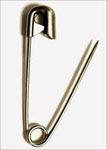
Apophenia is the spontaneous perception of connections and meaningfulness of unrelated phenomena. The term was coined by German neurologist and psychiatrist Klaus Conrad (1905-1961). Conrad focused on the finding of abnormal meaning or significance in random experiences by psychotic people. The term has found a place outside of psychiatry and is used to describe the natural tendency of human beings to find meaning and significance in random, coincidental, or impersonal data. Apophenia may be described as the tendency to find personal information in noise, e.g., happening upon an open safety pin and seeing the arms as a sign indicating the time your son committed suicide.

Photo by Phil Plait
Pareidolia is a type of illusion or misperception involving a vague or obscure stimulus being perceived as something clear and distinct. For example, in the discolorations of a burnt tortilla one sees the face of Jesus. Or one sees the image of Mother Teresa in the folds of a cinnamon bun or Vladimir Lenin in the soap scum of a shower curtain.

copyright Mark D. Phillips
Apophenia and pareidolia can occur simultaneously as in the case of seeing a birthmark pattern on a goat as the Arabic word for Allah and thinking you've received a message from god. Likewise, not only seeing the Virgin Mary in tree bark but believing the appearance is a divine sign brings together apophenia and pareidolia. Seeing an alien spaceship in a pattern of lights in the sky is an example of pareidolia, but it becomes apophenia if you believe the aliens have picked you as their special envoy. Seeing Satan in the smoke of a burning building slips from pareidolia to apophenia when the viewer starts thinking that Satan is giving the world a sign that he is alive and well.

Under ordinary circumstances, apophenia provides a psychological explanation for many delusions based on sense perception. For example, it explains many UFO sightings, as well as the hearing of sinister messages on records played backwards. Pareidolia explains Elvis, Bigfoot, and Loch Ness Monster sightings. Pareidolia and apophenia explain numerous religious apparitions and visions. And they explain why some people see a face or a building in a photograph of the Cydonia region of Mars.

Under clinical circumstances, some psychologists encourage pareidolia and apophenia as a means to understanding a patient, e.g., the Rorschach ink blot test.

According to Peter Brugger of the Department of Neurology, University Hospital, Zurich, "The propensity to see connections between seemingly unrelated objects or ideas most closely links psychosis to creativity ... apophenia and creativity may even be seen as two sides of the same coin." Some of the most creative people in the world, then, must be psychoanalysts and therapists who use projective tests like the Rorschach test or who see patterns of child abuse behind every emotional problem. Brugger notes that one analyst thought he had support for Freud's notion of penis envy because more females than males failed to return their pencils after a test. Another spent nine pages in a prestigious journal describing how sidewalk cracks are vaginas and feet are penises, and the old saw about not stepping on cracks is actually a warning to stay away from the female sex organ.

Soon after his son committed suicide, Episcopalian Bishop James A. Pike (1913-1969) began seeing meaningful messages in such things as a stopped clock, the angle of an open safety pin, and the angle formed by two postcards lying on the floor. He thought they were conveying the time his son had shot himself (Christopher 1975: 139).

Brugger gives examples of pareidolia and apophenia from August Strindberg's Occult Diary, the playwright's own account of his psychotic break:
He saw "two insignia of witches, the goat's horn and the besom" in a rock and wondered "what demon it was who had put [them] ... just there and in my way on this particular morning." A building then looked like an oven and he thought of Dante's Inferno.

He sees sticks on the ground and sees them as forming Greek letters which he interprets to be the abbreviation of a man's name and feels he now knows that this man is the one who is persecuting him. He sees sticks on the bottom of a chest and is sure they form a pentagram.

He sees tiny hands in prayer when he looks at a walnut under a microscope and it "filled me with horror."

His crumpled pillow looks "like a marble head in the style of Michelangelo." Strindberg comments that "these occurrences could not be regarded as accidental, for on some days the pillow presented the appearance of horrible monsters, of Gothic gargoyles, of dragons, and one night ... I was greeted by the Evil One himself...."
Brugger's research indicates that high levels of dopamine affect the propensity to find meaning, patterns, and significance where there is none, and that this propensity is related to a tendency to believe in the paranormal.

Monday, December 26, 2011

ad hoc hypothesis


In science, an ad hoc hypothesis is an assumption made in response to facts that are inconsistent with a theory in order to prevent the theory from being falsified. By extension, an ad hoc hypothesis is any assumption made to save a claim from being refuted. What are often called ad hoc hypotheses might better be referred to simply as rationalizations.

One of the more important ways of testing a scientific theory is to deduce observations that should occur under specified conditions if the theory is correct. An experiment may create those conditions and if the predicted observations occur, the theory is said to be confirmed. Experiments that confirm a theory should be replicable. If the predicted observations do not occur and it is determined that the theory cannot be correct if they do not, then the theory is falsified. Likewise, if experiments fail to replicate confirmations and it is determined that the theory cannot be correct if replication doesn't occur, then the theory is said to be falsified. If a new fact is discovered that is inconsistent with the theory, the fact must be accommodated. The theory might be tweaked or it may be preserved by hypothesizing another fact that would make the first fact consistent with the theory. Or, the fact might prove the theory false.
___

When William Hershel discovered the planet Uranus in 1781 by telescopic observation, it was also discovered that the new planet’s orbit was different from what it should have been according to Newton’s laws. The orbit of Uranus was an anomaly: a phenomenon that apparently did not fit with the Newtonian paradigm. Some scientists may have thrown up their hands and said: “See, Newton was wrong! Hah!” Others may have offered the ad hoc hypothesis that the anomalous orbit was caused directly by God. Uranus has a different kind of orbit than the other planets because God is working a miracle—suspending the laws of nature—perhaps to demonstrate his power and existence to us. But most scientists set to work to solve the puzzle. The simplest solution was to posit another planet beyond the orbit of Uranus whose gravitational force was affecting the planet’s orbit. This hypothesis could be independently tested. Its size and orbit could be calculated based on how much it perturbed the motion of Uranus. Thus was Neptune discovered. When the math for Neptune’s orbit didn’t work in accordance with Newton’s laws, it was proposed that still another planet awaited discovery. The object known as Pluto gave astronomers the data to show that Neptune did, after all, orbit in accordance with Newton’s laws. Both of these hypotheses could be independently tested, albeit with some difficulty given the state of knowledge and technology at the time.
___

When Alfred Wegener proposed his theory of continental drift in 1912 against the prevailing theory that the Earth was formed by cooling from a molten state and contractions, he could not explain how continents move. It was suggested that gravity was the force behind the movement of continents, though there was no scientific evidence for this notion. In fact, scientists could and did show that gravity was too weak a force to account for the movement of continents. Alexis du Toit, a defender of Wegener’s theory, argued for radioactive melting of the ocean floor at continental borders as the mechanism by which continents might move. “This ad hoc hypothesis added no increment of plausibility to Wegener’s speculation,” wrote Stephen Jay Gould (Ever Since Darwin. W.W. Norton & Company.1979, p. 163).
___

George Dillman claims that he and his top students can knock out people by manipulating some sort of subtle energy called qi (chi or ch'i, pronounced chee). When 8th degree black belt Leon Jay failed to move Luigi Garlaschelli with qi, Dillman offered the following ad hoc hypotheses. 1. Garlaschelli is a total non-believer and you must believe you can be knocked out by qi for the power to work. 2. Garlaschelli might have had one big toe pointing upward and the other pointing downward. If so, the power won't work. 3. Maybe Garlaschelli wasn’t knocked out because his tongue was "in the wrong position."

While Dillman's hypotheses seem like obvious rationalizations, they have the merit of being empirically testable to a degree. Qi remains undetectable by science's most refined measuring instruments, but we can at least test the toe and tongue position claims. If the no-touch knockout doesn't work even when the toes and tongues are aligned the way Dillman wants them, we'll at least know that these hypotheses are false. On the other hand, if Jay or Dillman knocked over Garlaschelli without touching him when his toe and tongue were aligned, we'd have evidence in favor of the qi hypothesis.
___